On August 22, 2026, a humanoid robot crossed the 100-meter finish line at Beijing's National Speed Skating Oval, fell over, and caught fire. A firefighter put it out with an extinguisher while staff wiped foam off the track ( في 22 أغسطس 2026، عبر إنسان آلي خط النهاية لمسافة 100 متر في حلبة بكين الوطنية للتزلج السريع، وسقط اشتعلت فيه النيران. أطفأه رجل إطفاء بمطفأة حريق بينما مسح الموظفون الرغوة من المسار (Reuters photo coverage via Dawn). The same weekend, other robots at the 2nd World Humanoid Robot Games were carried off on stretchers, and a robot beat Usain Bolt's 100m world record. ). في نفس نهاية الأسبوع، تم نقل روبوتات أخرى في النسخة الثانية من ألعاب الروبوتات البشرية العالمية على نقالات، وفاز روبوت برقم يوسain Bolt القياسي العالمي في 100 متر.
Both things are true at once, and that is the story. Humanoids are now fast enough to outrun the fastest human who ever lived, and fragile enough that finishing a sprint sometimes ends in flames. Two years of Chinese robot sporting events, the 2025 and 2026 World Humanoid Robot Games and the Beijing E-Town half-marathons, have produced the largest public dataset of humanoid hardware failures ever assembled. Thousands of robots, pushed to their limits, on camera, with the press watching.
Unitree Spring Festival Gala Robots —a Full Release of Additional Details — Unitree Robotics
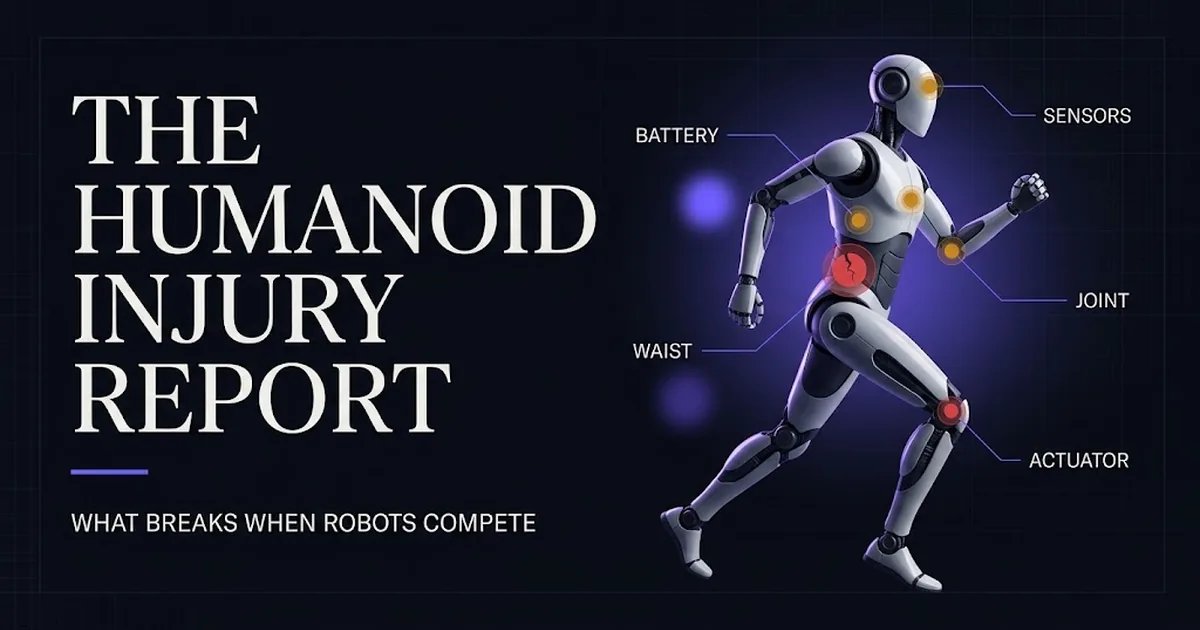
This is the injury report: what actually breaks, which subsystems fail, and why it matters for anyone who will own, deploy, or repair one of these machines.
The events, briefly
The 2026 World Humanoid Robot Games ran August 22–26 in Beijing, with 2,056 robots from 666 teams across 16 countries, quadruple the robot count of the inaugural 2025 edition (Yahoo Tech Yahoo Tech). The program covered 51 events: 30 competitive disciplines like sprinting, kickboxing, soccer, and high jump, plus 21 scenario-based trials such as fire rescue, power-tool assembly, and hotel service (Interesting Engineering).
The headline results were genuinely historic. A robot ran the 100m in 9.39 seconds, beating Bolt's 9.58 human record from 2009 ( كانت النتائج البارزة تاريخية حقاً. ركض روبوت 100 متر في 9.39 ثانية، محطماً الرقم القياسي البشري لبولت البالغة 9.58 ثانية من عام 2009 (AP via KIRO 7). The Tien Kung Ultra clocked 38.15 seconds over 400m, well inside Wayde van Niekerk's 43.03 human record ( ). سجل Tien Kung Ultra 38.15 ثانية على 400 متر، وهو أقل بكثير من الرقم القياسي البشري لويند فان نيكيرك البالغة 43.03 ثانية (Kyodo via Bangkok Post). A robot cleared 2.88m in the high jump against Javier Sotomayor's 2.45m. For context: the winning 100m time at the 2025 games was 21.50 seconds. The field got more than twice as fast in one year. ). وقفز روبوت 2.88 متر في الوثب العالي مقابل 2.45 متر لخافيير سوتومايور. للسياق: كان زمن الفوز في 100 متر في ألعاب 2025 هو 21.50 ثانية. أصبح المجال أسرع بأكثر من الضعف في عام واحد.
And yet. Robots tripped, fell, broke apart, and burned. The failure footage went as viral as the records. For our purposes the failures are the more useful data.
The injury taxonomy
Across the 2025 half-marathon, the 2025 games, and the 2026 games, the same failure classes recur. Here is the field guide.
1. Deceleration trauma: the sprinter's injury 1. صدمة التباطؤ: إصابة العداء
The single most distinctive humanoid sports injury of 2026 is not falling while running. It is the inability to stop.
Race organizers place crash mats at the end of sprint lanes because slamming into a cushion is, for now, the standard braking method. Robot sprinters routinely finish by smashing into safety barriers (Yahoo Tech Yahoo Tech). One Unitree machine hit a top speed of 28.3 mph, failed to brake, veered off the track, and crashed into the trackside. The Tien Kung Ultra's record-beating 9.32-second preliminary heat ended with the robot hitting the deceleration mat and catching fire ( ). وصلت إحدى آلات Unitree إلى سرعة قصوى تبلغ 28.3 ميل في الساعة، فشلت في الكبح، انحرفت عن المسار، وتحطمت بجانبه. انتهى الوقت القياسي الحارق Tien Kung Ultra البالغة 9.32 ثانية في الجولة التمهيدية مع اصطدام الروبوت بوسادة التباطؤ واشتعال النيران فيه (Kyodo كيوودو).
The engineering reason is straightforward. Staying upright requires constant split-second balance computation; controlled deceleration from 28 mph on two legs multiplies that difficulty. Sprint control policies are trained to maximize forward speed, and reversing enormous momentum through knee and ankle actuators without pitching forward is a problem nobody has solved. Humans get braking for free from millions of years of evolved reflexes and compliant tissue. Robots get a mat.
The downstream damage: high-speed impacts concentrate load on the chest shell, arms, and, as the next section shows, the waist.
2. Structural failure at the waist
Days before the 2026 games opened, a training clip went viral: a robot sprinting down the indoor track fails to slow, hits the padded barrier, bends sharply at the waist, folds forward, and collapses with sparks flying (Interesting Engineering). Chinese social media captioned it, roughly, "ran too fast, couldn't brake, broke its waist on the mat." ). وصفته وسائل التواصل الاجتماعي الصينية بشكل تقريبي بـ "ركض بسرعة كبيرة، لم يستطع الكبح، كسر خصره على الوسادة."
The waist is a predictable weak point. It is the highest-torque joint in the torso, carries the full inertia of the upper body during any impact, and in most current designs is a single yaw-plus-pitch actuator assembly rather than the load-distributing column a human spine provides. When a 40–70kg machine traveling at sprint speed stops against a wall, the bending moment goes through that one joint. Waist actuator replacement is also among the more invasive repairs on current platforms, since the torso typically has to come apart.
3. Thermal events: overheating and fire
Fire made its competitive debut at these events. The August 22 incident, a robot burning on the track after finishing the 100m preliminaries while a firefighter extinguished it, was photographed by Reuters and Getty from multiple angles (Geo/Reuters جييو/رويترز). CBS reported robots catching fire during the games, plural (via KIRO 7 عبر KIRO 7).
Overheating short of fire is far more common. At the April 2025 Beijing E-Town half-marathon, the first race of its kind, many of the 21 robot entrants overheated and fell, and handlers resorted to cooling sprays mid-race to keep motors alive (event record, citing Guardian and Reuters reporting). Sustained locomotion pushes joint motors and drive electronics to thermal limits that demo videos never reach. A sprint stresses peak current; a half-marathon stresses heat dissipation for two-plus hours. Different event, different failure.
Lithium battery packs add the fire risk. A hard impact after a sprint combines a hot, heavily-drawn pack with mechanical shock, which is exactly the recipe battery engineers design against in EVs, on a platform young enough that crash-tested pack enclosures are not yet standard.
4. Battery exhaustion
Tien Kung Ultra, the eventual half-marathon winner at 2 hours 40 minutes, fell once during the race because its battery ran low, and needed multiple battery swaps to finish تنين كونغ ألترا، الفائز النهائي بسباق نصف الماراثون بزمن ساعتين و40 دقيقة، سقط مرة واحدة خلال السباق بسبب انخفاض البطارية، واحتاج لعدة عمليات تبديل بطارية لإنهاء السباقrace coverage). The event rules formally included battery-swap pit stops (AP via Euronews).
Note the failure mode: low battery did not mean the robot politely stopped. It fell. Voltage sag under load degrades actuator torque before the system shuts down, and a biped that loses torque mid-stride goes over. For owners, this maps directly to real-world risk: a humanoid at 8% charge is not a laptop at 8% charge. It is a machine that may fall on whatever is next to it.
5. Falls, and what one fall costs
السقوطات هي الإشعاع الأساسي في كل حدث للروبوتات البشرية. في ألعاب 2025، سقطت روبوتات الكيك بوكسينج عندما أخطأت اللكمة، وتعثرت روبوتات كرة القدم عند أقل لمسة، ووقعت عروض المسرح في منتصف الرقص وحملهن الموظفون (Smithsonian). في سباقات التتابع، لاحظ أحد المراقبين تأثيرًا متسلسلًا: عندما سقط أحد الروبوتات، تبعته روبوتات أخرى في السقوط (News On Air). في سباق نصف الماراثون لعام 2025، انهار روبوت واحد عند إشارة الانطلاق و остался без حراك لدقائق; وارتطم روبوت آخر بالسياج بعد عدة خطواتAl Jazeera).
ما هي التكلفة الفعلية للسقوط؟ أفضل نقطة بيانات متاحة للجمهور تأتي من دراسة موادياتية لعام 2026 حول حماية السقوط. أجرى الباحثون اختبارات سقوط واقعية متكررة على روبوت بشري PM01 ووجدوا أنه بدون حماية، تعرض الروبوت لأضرار جسيمة في المكونات المادية بعد سقوط أو سقوطين ديناميكيين فقط: هياكل إنشائية متشققة، ولوحات دوائر تالفة، ومحركات مؤازرة معطلة أو مكسورة. وعند تجهيزه بمادة حماية ناعمة، نجا نفس الروبوت من أكثر من ثلاثين سقوطًا متتاليًا دون أي أضرار ظاهرةarXiv 2601.02857).
أعد القراءة كمالك: سقوط واحد أو اثنان سيئان قد يعني إصلاحات على مستوى اللوحة الإلكترونية والمشغلات. هذا هو السبب في أن أبحاث استعادة التوازن بعد السقوط تعامل النهوض كمهارة أساسية (arXiv 2502.12152), ولماذا ستوجد سوق قطع الغيار للحشوات الواقية قبل سوق قطع الغيار لأي شيء آخر تقريباً.
أعطال الملاحة والتحكم
ليست كل كارثة تبدأ بالفيزياء. بعضها يبدأ بالإدراك. انحرفت روبوتات نصف الماراثون عن المسار لأن الملاحة المعتمدة على IMU فقط تراكمت فيها الأخطاء دون تصحيح بصري، وواحد على الأقل دار في دوائر بعيداً عن البداية قبل أن يصطدم بجدارتحليل تقني بعد السباقانضمت إليها أعطال ميكانيكية بسيطة: ارتخاء الرؤوس وسقوط الأحذية، تم إصلاحها على جانب المسار باستخدام شريط لاصقسجل الأحداث).
جعلت ألعاب 2026 هذه الفئة من الأعطال أكثر وضوحاً بشكل متعمد. تحولت عدة أحداث سباقات من التشغيل والتحكم عن بُعد إلى التشغيل الذاتي بالكامل، ولاحظ المراقبون أن عدائي هذا العام واجهوا صعوبة أكبر في الملاحة مقارنة بالآلات التي يتحكم بها البشر من العام الماضي (Yahoo Tech Yahoo Techعند إزالة الإنسان من الحلقة، تصبح منظومة الإدراك الحسي (perception stack) أضعف حلقة. هذه هي الصورة الصادقة للنشر بدون إشراف.
7. الضمانات البشرية
فئة نادراً ما تُسلط عليها الضوء: البشر. في سباق نصف الماراثون لعام 2025، اصطدم روبوت بسور وأسقط مشرفه الخاص معه (Business Insider). احتاج كل روبوت في تلك المنافسة إلى دعم بشري، ويعمل فريق الدعم داخل نطاق سقوط آلة يزيد وزنها عن 40 كجم. مع دخول الروبوتات البشرية إلى المنازل وأماكن العمل، يصبح سؤال "من يُصاب بأذى عند سقوطها" مسألة مسؤولية قانونية، وليس مقطعًا كوميديًا للضحك.
لماذا أدت سنة 2026 إلى كسر المزيد من الروبوتات مقارنة بـ 2025
بشكل غير بديهي، أصبحت الروبوتات أفضل وتفاقمت الحوادث بشكل أسوأ، وذلك لثلاثة أسباب متراكمة. تضاعفت السرعات بشكل يتجاوز الضعف، لذا تربعت طاقة التصادم بشكل تقريبي (طاقة الحركة تتناسب مع مربع السرعة). أزالت قواعد الحدث الطيارين البشريين من عدة تخصصات، مما كشف الاستقلالية الأولية. وتضاعف المجال أربعة أضعاف، لذا تم دفع المزيد من الآلات لما وراء حدودها في الأماكن العامة.
هذا ما تبدو عليه صناعة ناضجة تختبر نفسها تحت الضغط. أوضح الخبراء الذين تم الاستشهاد بهم بعد الحادثة الفيروسية المتعلقة بكسر الخصر أن المسابقات تهدف إلى كشف نقاط الضعف في الإدراك والتخطيط والتوازن والتحكم قبل وصول الروبوتات إلى النشر الفعليInteresting Engineering). بيانات الفشل هي المنتج.
ما يعنيه هذا إذا كنت تمتلك humanoid أو ستمتلكه
تتطابق إصابات المنافسات بشكل واضح مع فئات الإصلاح التي ستحدد ملكية الروبوتات البشرية:
المشغلات الخاصة بالخصر والأرجل تتحمل أسوأ الأحمال الهيكلية وهي الأكثر تدخلاً عند استبدالها الإدارة الحرارية يحد من العمل المستدام؛ روبوت ترتفع درجة حرارته ارتفاعاً مفرطاً في نصف ماراثون سترتفع درجة حرارته أيضاً في نوبة عمل بالمستودع لمدة ثماني ساعات بدون إدارة دورة العمل صحة البطارية هو مسألة سلامة، وليس فقط مشكلة في وقت التشغيل، لأن انخفاض العزم يحدث قبل الإيقاف. السقوطات هي مصدر التلف الشامل، ووفقًا لدراسة PM01، يمكن لواحد أو اثنان منها الوصول إلى لوحات الدوائر الكهربائية والمشغلات. أعطال الإدراك تتسبب في أعطال تبدو ميكانيكية لكنها برمجية
لا شيء من هذا يغطيه الضمان الحالي بشكل جيد، ومعظم هذه الضمانات تُلغى بفتح الجهاز وتتطلب إرساله إلى الشركة المصنعة للإصلاح. لا يوجد حتى الآن شبكة إصلاح تابعة لجهات خارجية للروبوتات البشرية. هذه الفجوة بالضبط هي ما نتتبعه في قسم الإصلاحالتي توثق تقارير الأعطال الحقيقية والمستندة إلى مصادر وإجراءات استكشاف الأخطاء وإصلاحها لروبوتات محددة، بدءًا من Unitree G1 و Unitree Go2.
إذا كنت تملك روبوتًا humanoid أو تخطط لامتلاك واحد، وتريد أن تكون الأول في القائمة عندما تصل خدمة الإصلاح المنزلية إلى مدينتك، انضم إلى قائمة انتظار الإصلاحأخبرنا عن مدينتك وروبوتك؛ نحن نبني خريطة الخدمة بناءً على الطلب
ستستمر الروبوتات في أن تصبح أسرع. سباق نصف الماراثون في E-Town عام 2026 شهد بالفعل فوز روبوت بالرقم القياسي العالمي البشري، وذلك بعد أقل من عام على فشل معظم المشاركين في إكماله على الإطلاق. ما لن يتغير قريباً: الآلة التي يمكنها التغلب على Usain Bolt في السرعة لا تزال لا تستطيع التوقف دون الاصطدام بجدار، ولا بد أن يقوم أحد بإصلاح ما يتعطل.